Weather Warfare

Discover how climate and chance storms tipped battles, reshaped campaigns, and redirected entire empires.
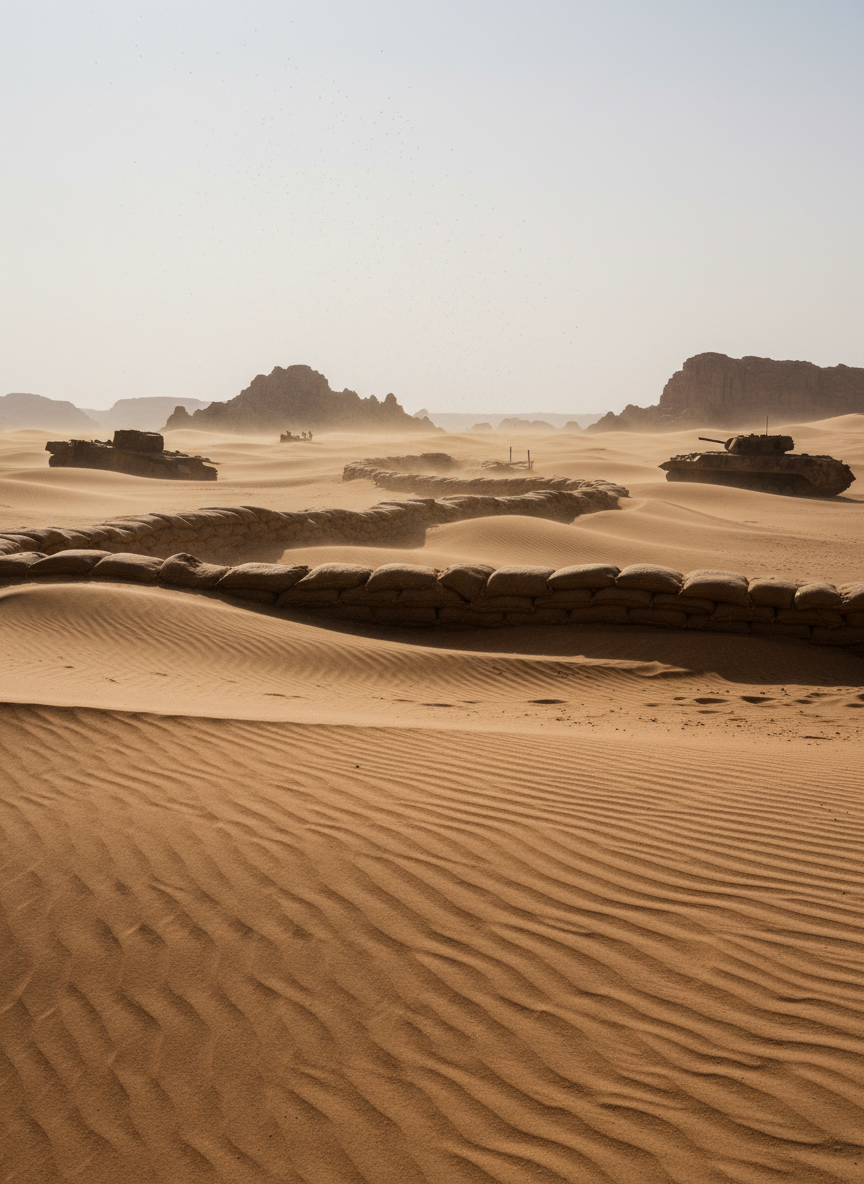
A vividly detailed desert battlefield scene at midday, photographed from an eye-level, slightly wide-angle perspective, showing a line of sandbag fortifications nearly swallowed by shifting dunes. Fine sand is captured mid-air in a faint, swirling sandstorm, partially obscuring distant rocky outcrops and rusted armored vehicle hulls. The harsh, overhead sun casts sharp, high-contrast shadows at the base of dunes and around the jagged shapes of abandoned equipment, while the sky appears pale, bleached, and hazy. Warm, golden-brown tones dominate, with the texture of rippled sand and wind-sculpted ridges in razor-sharp focus in the foreground. The mood is oppressive and tense, underscoring how heat and sandstorms complicate warfare. Clean, professional photographic realism and balanced composition support an educational exploration of weather’s role in desert campaigns.
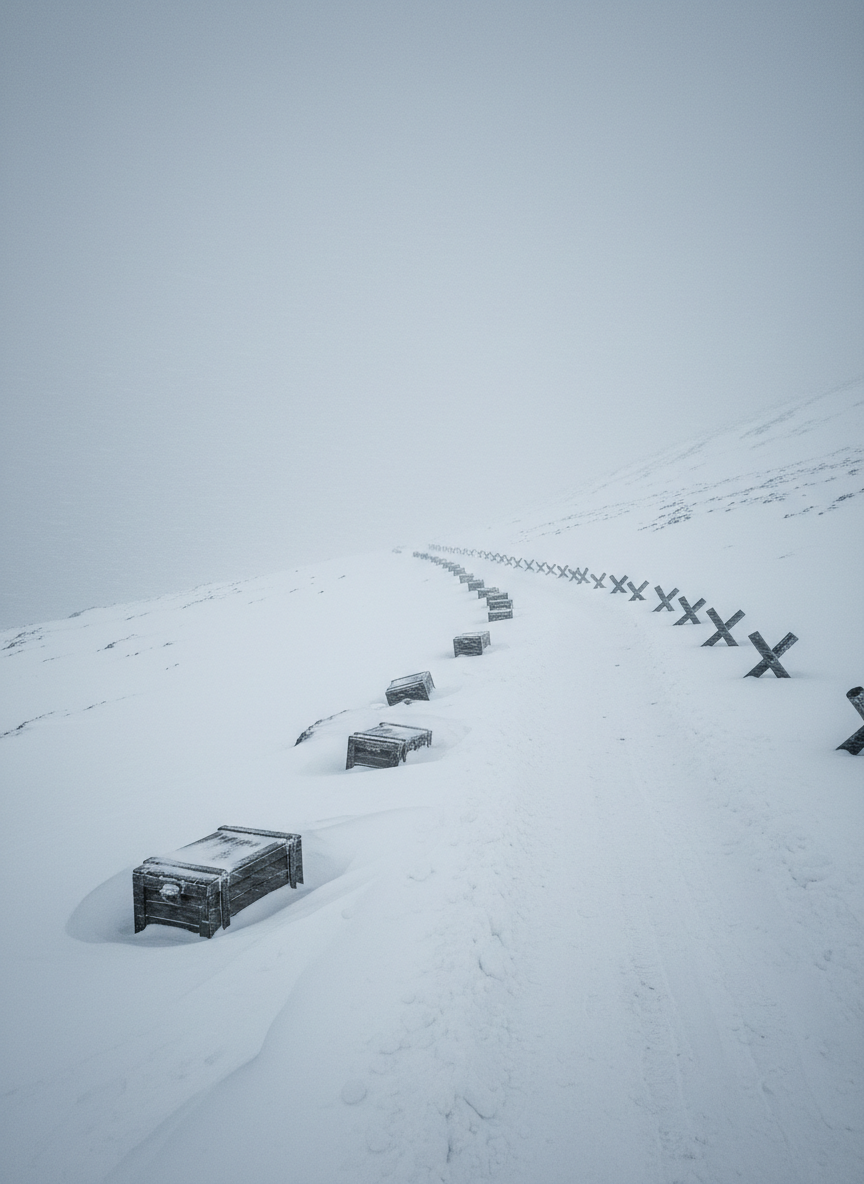
A snow-covered mountain pass rendered in crisp photographic realism, captured from a high, slightly aerial angle, showing a narrow, winding supply road nearly buried by thick drifts. Frozen wooden supply crates, half-submerged in snow, lie abandoned beside the path, while a line of simple, weather-beaten barricades disappears into a whiteout in the distance. The sky is an oppressive, flat pale gray, with fine snow blowing horizontally, streaked across the frame. Cold, bluish daylight creates a stark, desaturated palette, with subtle shadows forming around drifts and objects. The atmosphere is harsh and unforgiving, highlighting how blizzards can stall or destroy logistics. Composition uses leading lines of the road to draw the viewer’s eye into the storm, reinforcing a serious, professional educational mood.

How Weather Shapes Warfare

Explore how storms, droughts, and seasons have steered history’s greatest conflicts. Our modules blend meteorology, military history, and primary sources for students, educators, and enthusiasts. Follow our course pathways or build custom lessons from the full curricula page.

Programs
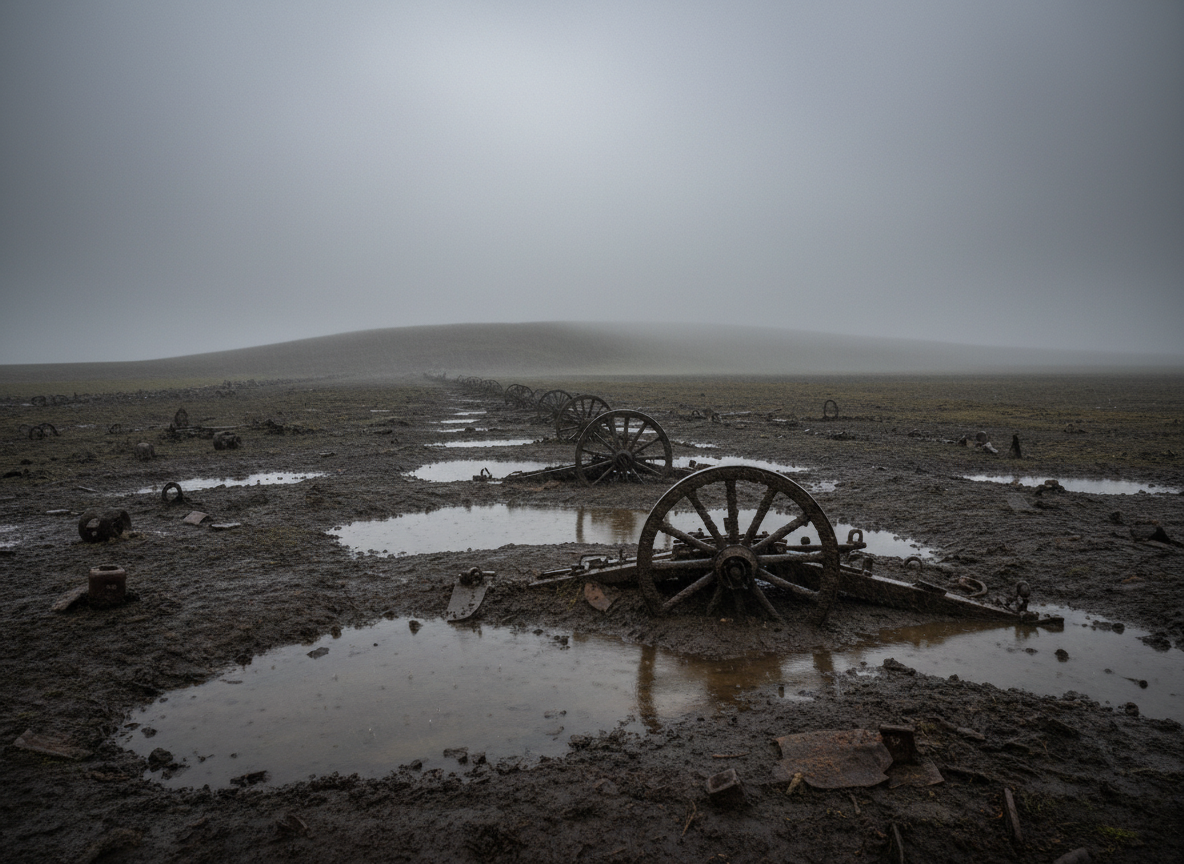
A lonely battlefield landscape photographed from a low, eye-level perspective, showing a muddy, churned-up field covered in deep puddles reflecting a brooding, overcast sky. A line of abandoned, mud-splattered artillery wheels and rusted metal fragments stretches toward a distant, fog-softened ridgeline. Fine drizzle streaks the air, captured as faint motion blur, while diffused gray light flattens harsh contrasts and emphasizes the wet sheen on soil and metal. The atmosphere is somber and contemplative, suggesting how storms and rain halted advances. The composition follows the rule of thirds, with the broken equipment leading the eye into the misty horizon. Photographic realism, muted color palette, and high detail reinforce a serious, educational tone about weather’s quiet power in war.

Use modular case studies on historic campaigns to enrich history, geography, or science courses with weather-focused analysis.
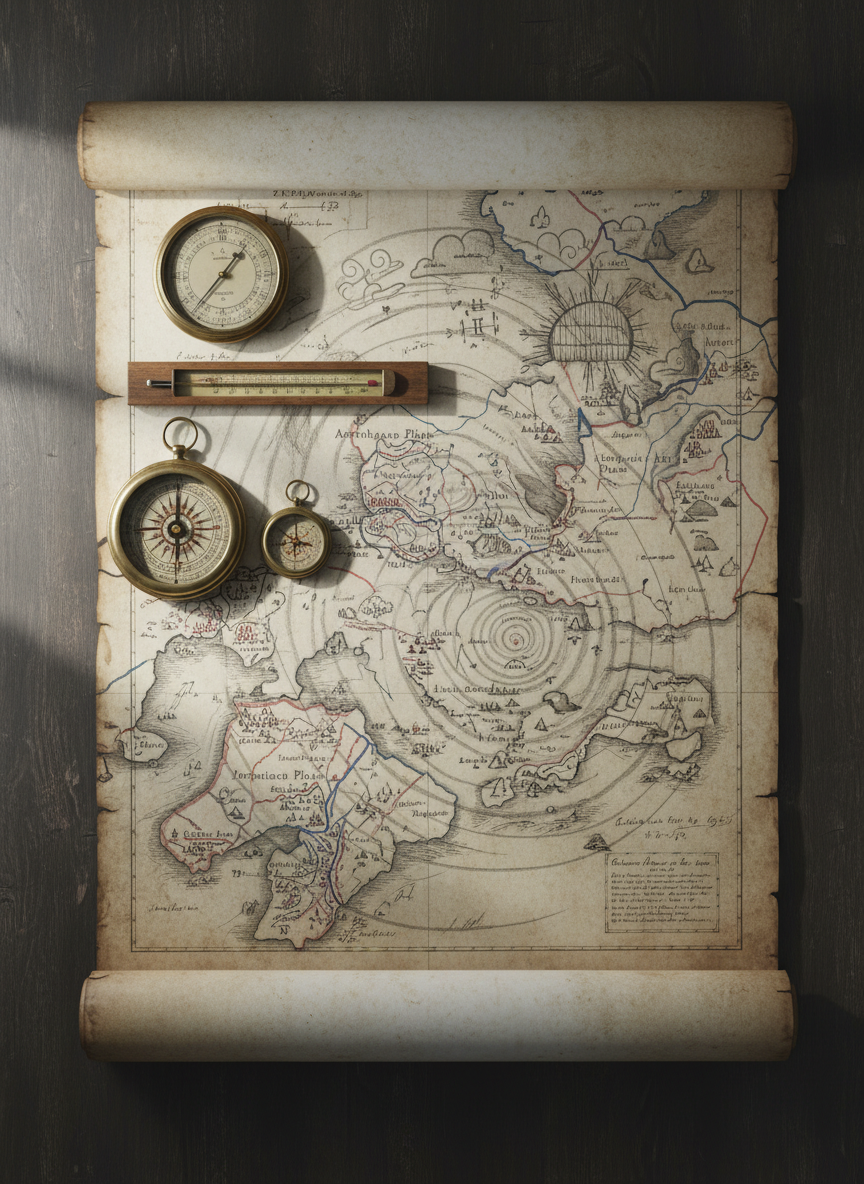
A detailed top-down photographic view of a large, antique campaign map spread across a dark wooden war table, with troop positions marked in faded red and blue ink and weather patterns overlaid in swirling charcoal-gray pencil. Along the map’s edges lie brass compasses, a tarnished barometer, and a narrow thermometer with tiny mercury beads. Diffused overcast light from a nearby unseen window casts soft, cool illumination, creating subtle reflections on the brass and gentle shadows in the map’s creases. The mood is analytical and contemplative, emphasizing strategy. Shot with sharp focus across the frame, using a centered yet slightly asymmetrical composition. The overall style is clean, professional photographic realism, highlighting the intersection of meteorology and military planning without any human presence.

Host guest lectures or virtual workshops where students interpret weather maps, battle reports, and diaries to reconstruct critical decisions.

Instructor inquiries

Reach out to discuss classroom adoption, custom materials, or collaborative projects exploring how weather shaped wars across eras.

← Back

Thank you for your response. ✨