Case Studies

Organized by era, region, and war to reveal weather’s hidden role in history.
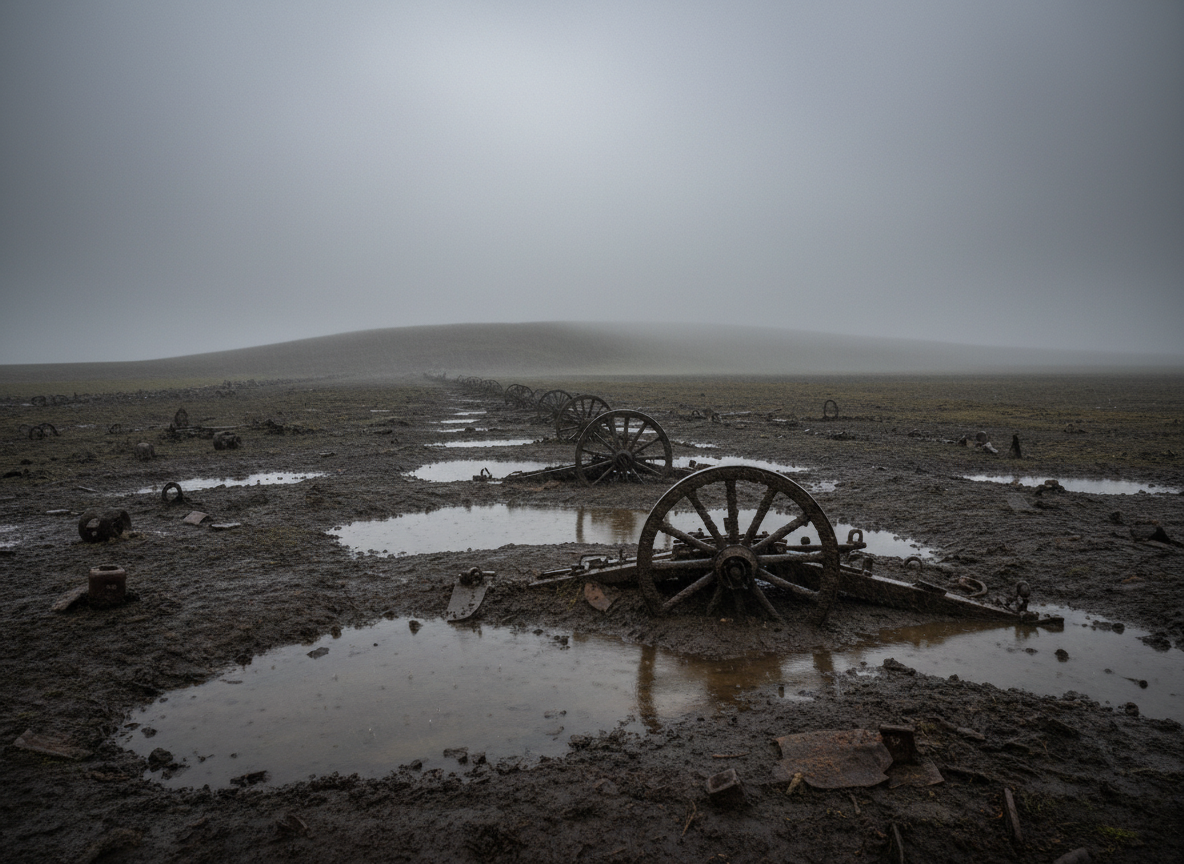
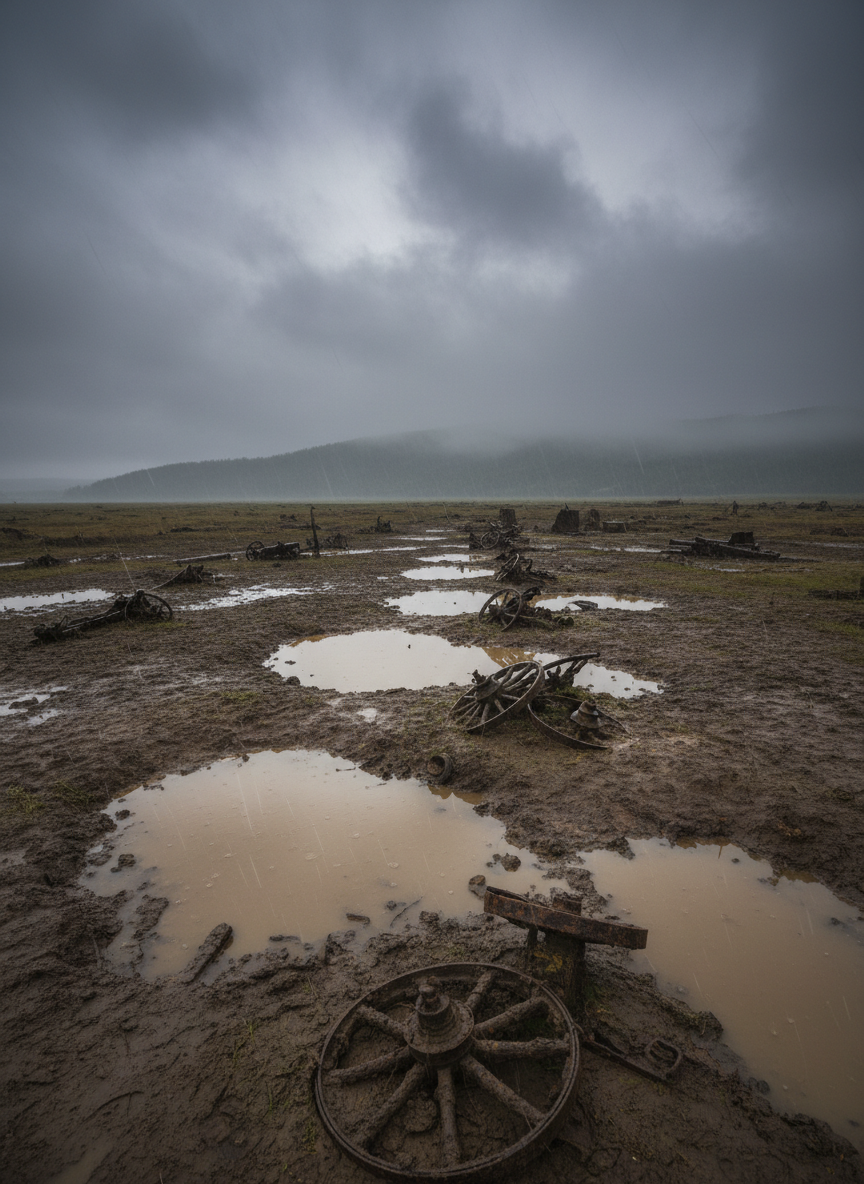
A lonely battlefield landscape photographed from a low, eye-level perspective, showing a muddy, churned-up field covered in deep puddles reflecting a brooding, overcast sky. A line of abandoned, mud-splattered artillery wheels and rusted metal fragments stretches toward a distant, fog-softened ridgeline. Fine drizzle streaks the air, captured as faint motion blur, while diffused gray light flattens harsh contrasts and emphasizes the wet sheen on soil and metal. The atmosphere is somber and contemplative, suggesting how storms and rain halted advances. The composition follows the rule of thirds, with the broken equipment leading the eye into the misty horizon. Photographic realism, muted color palette, and high detail reinforce a serious, educational tone about weather’s quiet power in war.
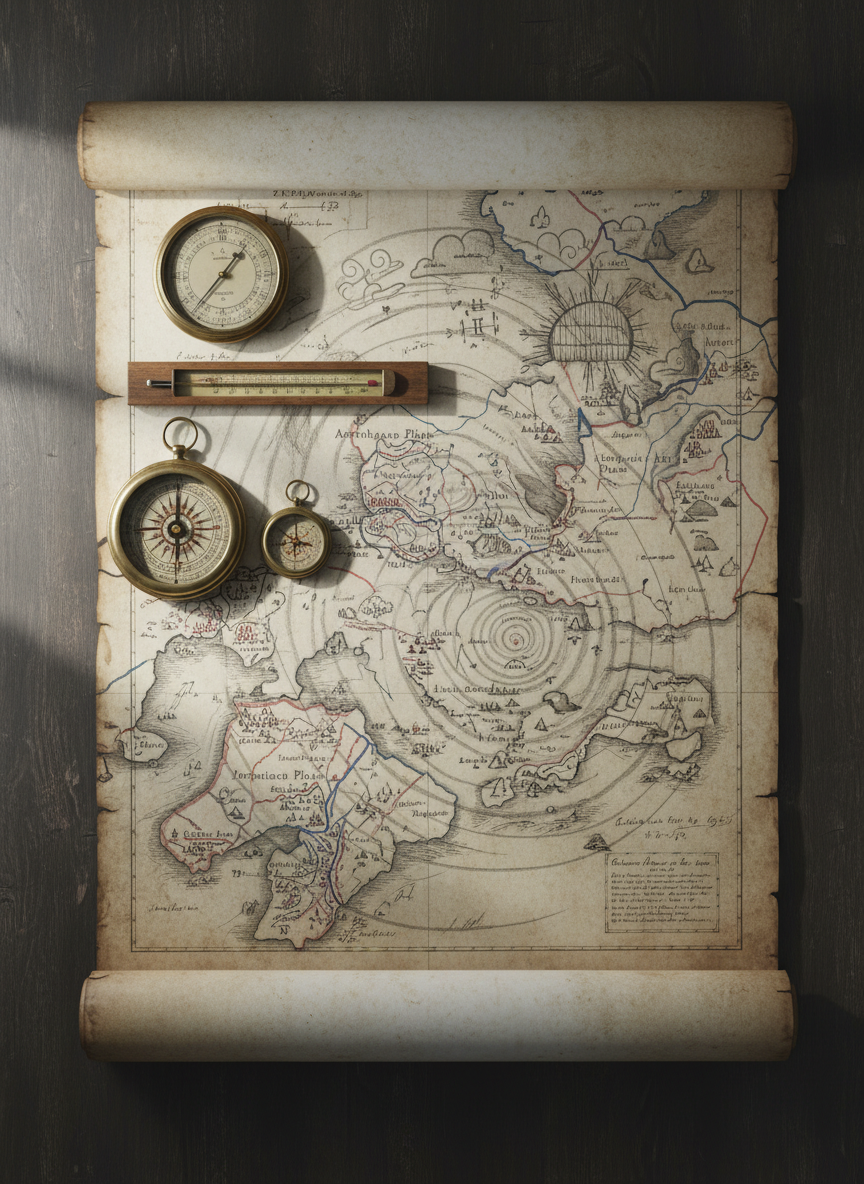
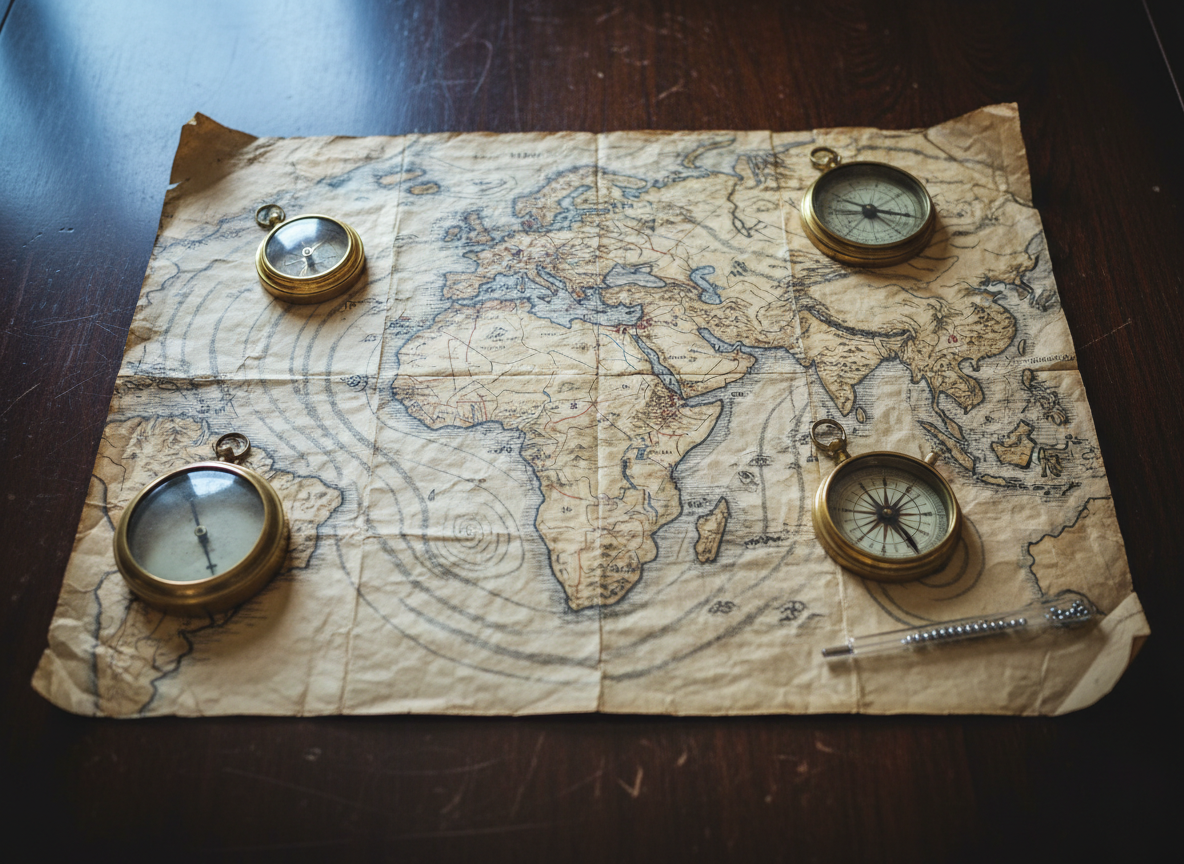
A detailed top-down photographic view of a large, antique campaign map spread across a dark wooden war table, with troop positions marked in faded red and blue ink and weather patterns overlaid in swirling charcoal-gray pencil. Along the map’s edges lie brass compasses, a tarnished barometer, and a narrow thermometer with tiny mercury beads. Diffused overcast light from a nearby unseen window casts soft, cool illumination, creating subtle reflections on the brass and gentle shadows in the map’s creases. The mood is analytical and contemplative, emphasizing strategy. Shot with sharp focus across the frame, using a centered yet slightly asymmetrical composition. The overall style is clean, professional photographic realism, highlighting the intersection of meteorology and military planning without any human presence.

Explore Weather-Shaped War Casefiles

Browse our case studies by era, region, and conflict to trace how storms, seasons, and climate shaped strategy. Filter campaigns for classroom use or independent research, from ancient sieges to modern mechanized wars.

Battles

Dive into detailed campaigns where weather reshaped outcomes.
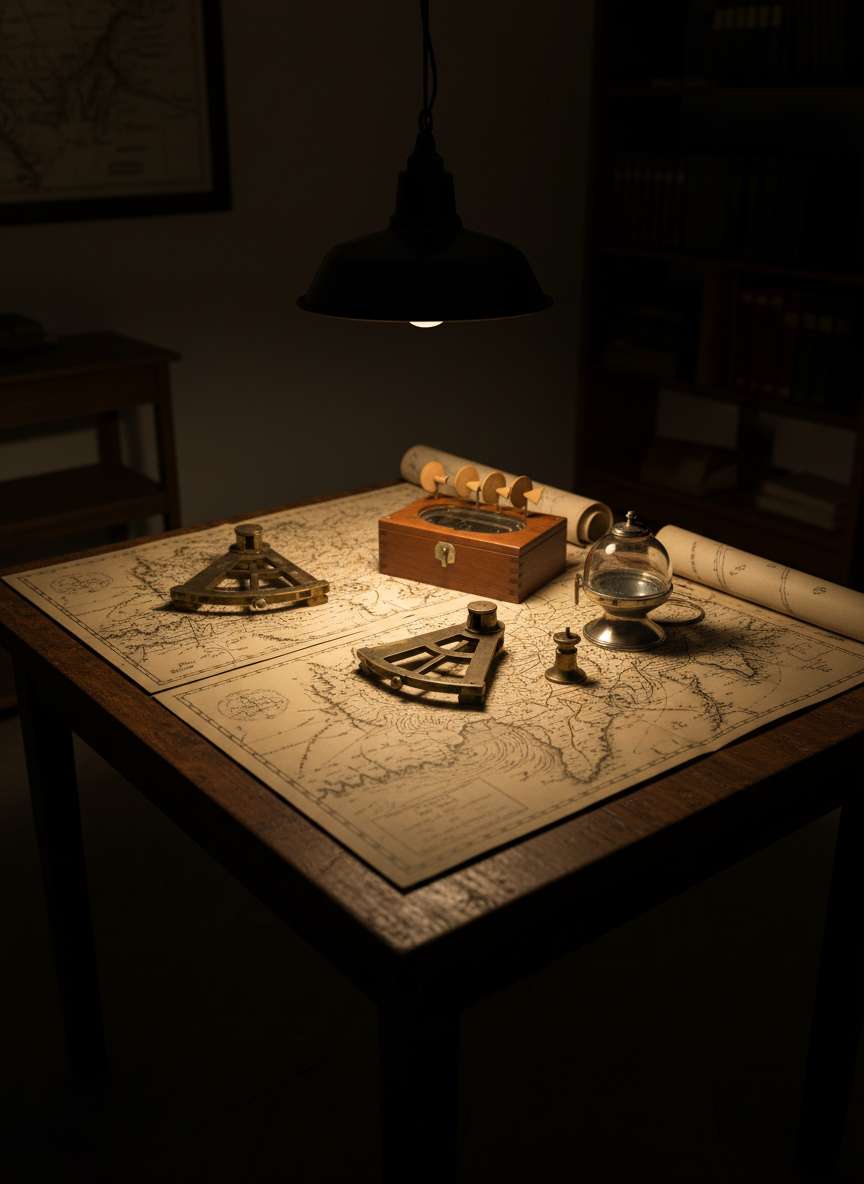
An old wooden naval chart table inside a dim war room, photographed from a slightly elevated angle, covered with detailed maritime maps showing coastlines, currents, and hand-drawn storm tracks in dark ink. A worn brass sextant, a wooden-encased anemometer, and a glass-domed marine barometer are arranged with precise spacing. A single shaded lamp above casts a focused warm pool of light, creating strong chiaroscuro contrast between illuminated instruments and the surrounding darkness. Shadows fall sharply, emphasizing engraved markings and the texture of aged paper. The mood is tense yet methodical, suggesting crucial planning against hurricanes and rough seas. The composition is carefully balanced with a shallow depth of field that softly blurs the table edges, reinforcing a professional, documentary-style photographic realism suitable for an educational history site.
A detailed top-down photographic view of a large, antique campaign map spread across a dark wooden war table, with troop positions marked in faded red and blue ink and weather patterns overlaid in swirling charcoal-gray pencil. Along the map’s edges lie brass compasses, a tarnished barometer, and a narrow thermometer with tiny mercury beads. Diffused overcast light from a nearby unseen window casts soft, cool illumination, creating subtle reflections on the brass and gentle shadows in the map’s creases. The mood is analytical and contemplative, emphasizing strategy. Shot with sharp focus across the frame, using a centered yet slightly asymmetrical composition. The overall style is clean, professional photographic realism, highlighting the intersection of meteorology and military planning without any human presence.
A lonely battlefield landscape photographed from a low, eye-level perspective, showing a muddy, churned-up field covered in deep puddles reflecting a brooding, overcast sky. A line of abandoned, mud-splattered artillery wheels and rusted metal fragments stretches toward a distant, fog-softened ridgeline. Fine drizzle streaks the air, captured as faint motion blur, while diffused gray light flattens harsh contrasts and emphasizes the wet sheen on soil and metal. The atmosphere is somber and contemplative, suggesting how storms and rain halted advances. The composition follows the rule of thirds, with the broken equipment leading the eye into the misty horizon. Photographic realism, muted color palette, and high detail reinforce a serious, educational tone about weather’s quiet power in war.